
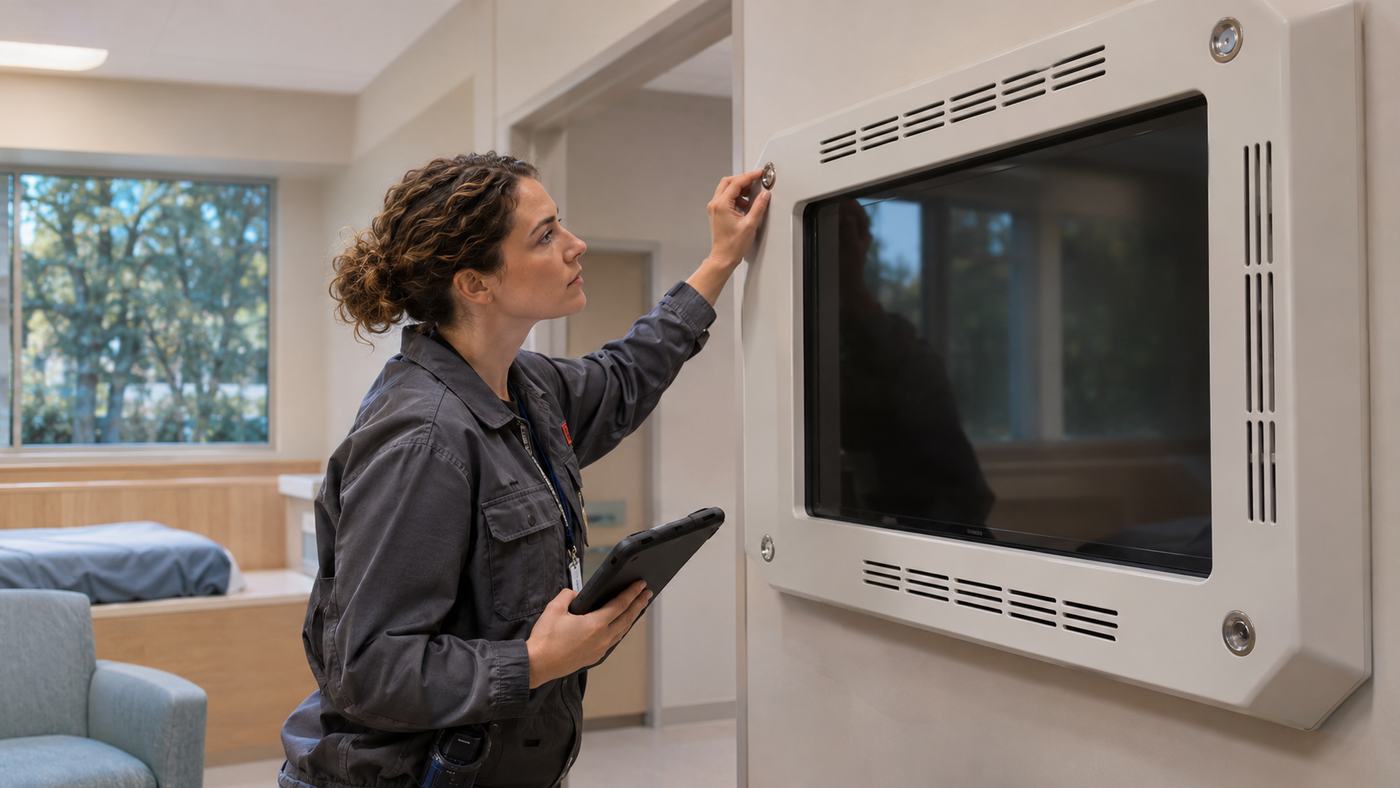
Digital technology plays a growing role in behavioral health facilities. Televisions, digital displays, and interactive screens support patient education, communication, recreational activities, and selected clinical programs. These tools can help patients access information, participate in structured activities, and maintain connections with others. The Substance Abuse and Mental Health Services Administration (SAMHSA) recognizes technology-assisted care as a way to support education, treatment engagement, and recovery services.
However, installing electronic equipment in behavioral health settings requires additional planning. Conventional screens may have exposed cables, removable parts, or mounting hardware that creates safety concerns. An LCD guard is a protective barrier or housing designed to reduce physical damage and unauthorized access to display equipment. Its suitability depends on the facility’s safety requirements, patient population, and intended use.
Why Digital Equipment Needs Additional Protection
Behavioral health environments present challenges that differ from those of ordinary healthcare spaces. Equipment must remain functional while reducing hazards associated with accessible wiring, exposed mounting components, and potentially breakable materials.
The Joint Commission emphasizes environmental risk assessments in psychiatric care settings. These evaluations help organizations identify hazards, including potential ligature points and objects that could cause injury. Protective hardware should therefore be selected as part of a wider safety strategy rather than treated as a standalone solution.
Digital access also requires careful consideration. NHS England’s guidance on technology in mental health inpatient care stresses that digital tools should support appropriate, personalized treatment. Their use should reflect patient needs, privacy, and clinical judgment.
How Do Different Display Protection Methods Compare?
Several installation methods can protect electronic displays. Each offers different advantages involving durability, accessibility, cost, and maintenance requirements.
1. Standard Commercial Mounts: Simple but Limited
Commercial television mounts are common in offices, classrooms, and general hospital areas. They provide flexible installation options and allow technicians to access equipment easily.
However, conventional mounts may expose brackets, cables, and adjustment mechanisms. These features can create hazards in behavioral health settings where patients have direct access to equipment.
Standard mounts may remain appropriate in staff-controlled rooms or other areas where an environmental assessment establishes that additional protection is unnecessary.
2. Reinforced Television Covers: Added Screen Protection
Reinforced covers place a protective barrier over the television screen. Materials such as impact-resistant polycarbonate can help reduce damage from accidental contact or deliberate impacts.
These covers may be easier to incorporate into existing installations than complete protective housings. However, their effectiveness depends on how much equipment they cover.
A screen-only barrier may leave mounting brackets, electrical connections, or surrounding gaps accessible. Facilities must examine the entire installation rather than focusing exclusively on screen strength.
3. Fully Enclosed Housings: Broader Equipment Security
Fully enclosed protective housings surround the display and restrict access to internal components. They may incorporate tamper-resistant fasteners, secured access panels, and carefully designed exterior surfaces.
The Behavioral Health Design Guide, referenced by the Facility Guidelines Institute, discusses tamper-resistant television installations for certain psychiatric environments. Such designs can reduce access to equipment while allowing displays to remain available for supervised activities.
Complete enclosures generally require more installation planning. Wall strength, mounting arrangements, cleaning access, and equipment ventilation must be evaluated.
4. Recessed Installations: Protection Through Placement
Recessed installations position displays within wall openings or specially constructed compartments. This approach reduces projection into the room and can make mounting components less accessible.
Recessed designs may also create a cleaner appearance. However, they require sufficient wall depth, structural coordination, and access for repairs.
Existing buildings may need modifications to accommodate these installations. Poorly planned recesses can create unwanted gaps or restrict airflow around electronic components.
5. Interactive Displays: Balancing Access and Protection
Touchscreens require a different approach because patients or staff must interact directly with the display surface. Protective equipment must preserve touch sensitivity, visibility, and accessibility.
Possible solutions include reinforced touch surfaces, secured mounting systems, protected wiring, and controlled user access.
These systems may support educational exercises or supervised therapeutic activities. Nevertheless, protective layers must be compatible with the manufacturer’s operating requirements.
What Matters Most When Choosing Protective Hardware?
Choosing between these approaches requires more than comparing physical strength. Healthcare administrators, clinical teams, and facility managers should examine several practical factors.
- Accessibility: Displays should remain visible and usable for their intended purpose, including appropriate access for patients with disabilities.
- Installation: Mounting systems must suit the wall structure and accommodate electrical connections without introducing unnecessary hazards.
- Durability: Protective materials should withstand expected use while avoiding exposed sharp edges or easily removable components.
- Heat management: Enclosures must provide adequate cooling based on equipment specifications. Restricted airflow can contribute to overheating.
- Maintenance: Authorized personnel need safe access for cleaning, inspections, repairs, and equipment replacement.
- Environmental risk: Hardware must be assessed for accessible fasteners, gaps, cords, breakable materials, and potential attachment points.
The Joint Commission does not endorse particular ligature-resistant products. Instead, it directs healthcare organizations to assess environmental risks, follow applicable guidance, and install equipment according to manufacturer instructions.
Why Safety Planning Still Matters After Installation
Protective equipment requires ongoing inspection. Fasteners may loosen, barriers may become damaged, and replacement electronics may have different ventilation requirements.
Maintenance teams should document inspections and coordinate necessary repairs with clinical staff. Equipment changes should also prompt a review of existing risk assessments.
The Centers for Medicare & Medicaid Services identifies environmental hazard evaluation as an important part of protecting patients. This principle applies when facilities introduce new electronic installations or modify existing ones.
Making Digital Technology Safer and More Accessible
Digital displays can contribute to education, communication, and meaningful activities in behavioral health facilities. The growing range of health technology and its applications also highlights how digital tools are becoming part of different healthcare services. However, their benefits in behavioral health settings depend on thoughtful placement, appropriate supervision, and equipment suited to the surrounding environment.
Commercial mounts may work in controlled spaces, while reinforced covers, enclosed housings, and recessed installations can address more demanding conditions. Interactive systems require additional attention to usability.
As healthcare organizations expand digital services, protective hardware will remain one element of responsible facility design. Combining suitable equipment with environmental assessments, regular maintenance, and clinical oversight can help facilities provide useful technology without overlooking patient safety.