
Healthcare is undergoing a steady transformation, driven by the integration of digital tools into everyday clinical practice. Essex Union Podiatry in Jersey City serves a clear representation of this industry shift by supporting and being the first advocate of integrating advanced and modern health technology. It’s goal is to improve customized treatments, enhance diagnostic precision, and ultimately, deliver desired patient outcomes.
Podiatry, which focuses on the diagnosis and treatment of conditions affecting the feet, ankles, and lower limbs, is especially well-suited for technological enhancement. Because movement, balance, and pressure distribution are central to many podiatric conditions, even small improvements in measurement and data accuracy can significantly influence treatment quality.
The Digital Transformation of Podiatric Care
Traditional podiatry relied heavily on visual inspection, physical examination, and patient-reported symptoms. While these methods remain essential, they are now complemented by digital systems that provide deeper clinical insight.
At clinics like Essex Union Podiatry in Jersey City, digital transformation has introduced new ways of analyzing patient conditions with greater accuracy. Instead of relying solely on static observation, clinicians can now examine dynamic movement patterns and internal structural stress points.
Understanding Movement in Real Time
One of the most impactful innovations in modern podiatry is digital gait analysis. This technology evaluates how a patient walks by capturing detailed movement data, often through motion sensors, video tracking systems, or pressure-sensitive walkways. In various podiatry clinics, gait analysis helps clinicians identify abnormalities such as:
- Uneven weight distribution
- Irregular walking patterns
- Joint misalignment
- Excessive pronation or supination
By visualizing movement in real time, specialists gain insights that are not always visible during a standard physical exam. This leads to more precise diagnoses and more targeted treatment plans, such as orthotic recommendations or physical therapy interventions.
Digital gait analysis is especially valuable for athletes, elderly patients, and individuals recovering from injuries, as it allows continuous monitoring of progress over time.
Pressure Mapping and Diagnostic Precision
Another key advancement in podiatric technology is pressure mapping. This system uses sensor-equipped platforms or insoles to measure how pressure is distributed across the foot during standing, walking, or running.
Pressure mapping helps clinicians at podiatry clinics identify areas of excessive strain that may contribute to pain, injury, or long-term complications. For example, high-pressure zones can indicate risk for conditions such as plantar fasciitis, diabetic foot ulcers, or joint degeneration.
By analyzing pressure distribution patterns, specialists can design highly personalized treatment solutions, including:
- Custom orthotic devices
- Footwear recommendations
- Rehabilitation exercises
- Load-balancing strategies
This level of precision reduces guesswork and ensures that treatment plans are tailored to each patient’s unique biomechanics.
Electronic Medical Records and Telehealth Integration
Aside from diagnostic tools, modern podiatry clinics depend largely on digital health infrastructure. Electronic medical records (EMRs) allow clinics to store, access, and update patient information efficiently. EMRs improve healthcare delivery by:
- Centralizing patient history and test results
- Reducing administrative errors
- Enabling faster clinical decision-making
- Improving coordination between specialists
In addition, telehealth consultations have become increasingly important. Patients can now receive follow-up care, initial consultations, or post-treatment guidance remotely, improving accessibility and convenience.
Telehealth is particularly beneficial for patients with mobility issues or those requiring ongoing monitoring without frequent in-person visits. It ensures continuity of care while reducing unnecessary travel and wait times.
Imaging Diagnostics and Early Detection
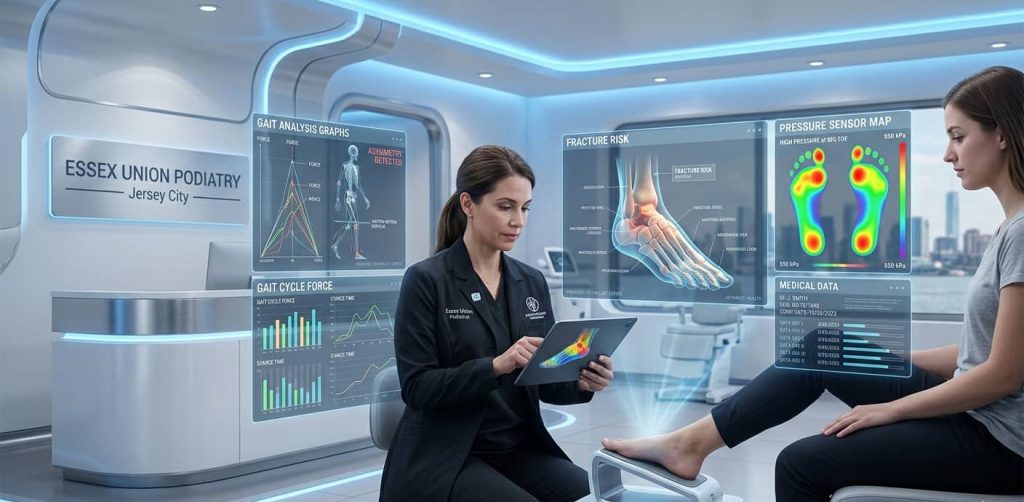
Advanced imaging technologies also play a vital role in modern podiatry. Tools such as digital X-rays, ultrasound imaging, and MRI integration allow clinicians to examine bone structure, soft tissue, and joint conditions in greater detail.
At Essex Union Podiatry, imaging diagnostics support early detection of conditions such as fractures, tendon injuries, and degenerative joint issues. Early identification is crucial in preventing long-term complications and reducing recovery time.
When combined with gait analysis and pressure mapping, imaging creates a comprehensive diagnostic ecosystem that provides a 360-degree view of a patient’s foot and ankle health.
The Future of Personalized Foot and Ankle Care
The integration of technology into podiatry is reshaping how care is delivered. Essex Union Podiatry in Jersey City exemplifies this evolution, where traditional medical expertise is enhanced by data-driven tools and digital innovation.
The future of podiatric care is increasingly personalized, predictive, and preventive. With continued advancements in sensor technology, AI-assisted diagnostics, and remote monitoring systems, clinicians will be able to anticipate issues before they become severe, and design treatments tailored with even greater precision.
Marriage of Technology and Podiatry Service is Delivering Comfort and Care to a New Level
Podiatry clinics adopting modern health technologies highlights a broader shift in healthcare, one where data, precision tools, and digital systems work alongside clinical expertise. From gait analysis and pressure mapping to telehealth and imaging diagnostics, these innovations are transforming how foot and ankle conditions are understood and treated.
Ultimately, this technological integration represents more than just convenience. It reflects a fundamental improvement in patient care, offering earlier detection, more accurate diagnoses, and highly personalized treatment strategies. As healthcare continues to evolve, clinics that embrace these smart tools are paving the way for a more efficient, accessible, and patient-centered future.